banner

UART Display

Precision Display, Beyond Limits

Home

UART Display

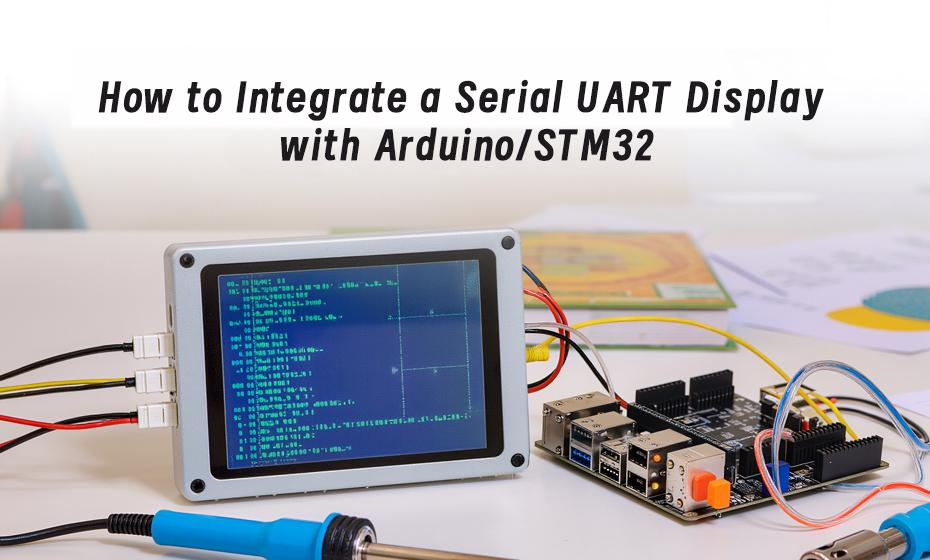
  • How to Integrate a Serial UART Display with Arduino/STM32
    Nov 20, 2025
    Integrating a full-color LCD display into your embedded project doesn't have to be complicated. Serial UART LCD displays offer a straightforward way to add rich graphical interfaces while keeping your code simple and your hardware requirements minimal. In this guide, we'll walk through integrating a serial UART display with both Arduino and STM32 platforms. Understanding the Serial UART Display Architecture A serial UART lcd display is a self-contained module that includes: TFT LCD panel Dedicated graphics controller Frame buffer memory Simple UART interface Unlike parallel displays that require numerous GPIO pins, a UART display Arduino solution needs only two pins (TX/RX) for communication, dramatically simplifying your design. Hardware Setup Components Needed: Serial UART TFT Display (e.g., Goldenvision GW-series) Arduino Uno/STM32 development board Jumper wires 5V/3.3V power supply Troubleshooting Common Issues No Display Response Check baud rate settings Verify TX/RX connections are not reversed Confirm power supply adequacy Corrupted Graphics Ensure stable power supply during transmission Add delay between rapid commands Check for buffer overflows Performance Issues Use display's built-in drawing primitives instead of pixel-by-pixel updates Implement dirty rectangle tracking to update only changed areas Utilize the display's internal memory for storing frequently used images Integrating a serial UART display with Arduino or STM32 platforms significantly simplifies embedded GUI development. The key advantages include: Reduced MCU load - Graphics processing happens on the display controller Simplified wiring - Minimal connection requirements Rapid development - High-level commands instead of complex driver writing Cross-platform compatibility - Same display works with multiple microcontroller families Whether you're building an UART display Arduino project for prototyping or an STM32 serial display solution for production, this approach provides the perfect balance of performance and development efficiency. Ready to Simplify Your Display Integration? At Goldenvision, our serial UART displays come with comprehensive libraries, detailed documentation, and technical support to ensure your LCD driver integration is successful. Browse our display solutions or contact our technical team for personalized assistance with your specific microcontroller platform.    
    Hot Tags : UART Display
  • Knob Screen vs. Traditional Touchscreen: Choosing the Right HMI
    Nov 10, 2025
    In the world of Human-Machine Interfaces (HMI), the dominance of the touchscreen is undeniable. Its intuitive, "what-you-see-is-what-you-touch" interaction has revolutionized consumer electronics. However, in many industrial, automotive, and medical applications, a pure touchscreen isn't always the optimal solution. This is where an innovative alternative—the Knob Screen Display —shines, offering a compelling blend of tactile and visual interaction. So, how do you choose between a traditional touchscreen and a modern rotary encoder display? The answer lies in understanding the user, the environment, and the task at hand.   What is a Knob Screen Display?   A Knob Screen Display is a hybrid HMI that integrates a physical rotary encoder (a knob) directly into a high-resolution TFT LCD. The knob can be rotated, pushed, or sometimes pulled, while the surrounding screen dynamically updates to show the context of the adjustment—such as volume levels, frequency settings, temperature values, or menu selections. It’s the best of both worlds: the tactile, precise feedback of a physical control and the flexible, rich graphics of a digital display.   The Traditional Touchscreen: Strengths and Limitations   Strengths: Maximized Screen Real Estate: Without physical buttons, the entire front panel can be a display, allowing for large, immersive visuals and flexible UI layouts. Ultimate Flexibility: The interface can be completely reconfigured with software updates for different modes or applications. Intuitive for Simple Tasks: Tapping and swiping are second nature to most users for basic interactions. Limitations: Lack of Tactile Feedback: Users must look at the screen to confirm every input, which can be distracting and slow in critical or fast-paced situations. Challenging in Specific Environments: Wearing gloves, dealing with moisture, or operating in high-vibration environments can make touchscreens unreliable or unusable. "Fat Finger" Problem: Precise selections on small buttons can be difficult.   The Knob Screen Advantage: Precision Meets Context   The rotary encoder display addresses the core limitations of touchscreens, particularly in professional and industrial settings. Key Advantages: Eyes-Free and Glove-Friendly Operation: A user can feel the distinct detents (clicks) of the knob and make precise adjustments without staring at the screen. This is crucial for safety and efficiency while driving, operating machinery, or in a medical setting. Unmatched Precision and Speed: Scrolling through a long list of parameters or making fine-value adjustments is significantly faster and more accurate with a knob than with repeated screen swipes. Superior User Experience in Critical Applications: The muscle memory and haptic feedback reduce cognitive load. The user focuses on the task, not the interface. Durability and Reliability: A high-quality knob is often more resilient to repeated, heavy use than a constant stream of pokes and swipes on a glass panel.   Head-to-Head: Choosing the Right Industrial HMI   When evaluating industrial HMI types, here is a simple decision matrix: UI Flexibility High (Screen changes context) Maximum Precision Adjustment Excellent (Ideal for numerical values) Good (with careful UI design) Speed of Navigation Fast (for menus & parameters) Fast (for direct selection) Learning Curve Low Low Ideal For Industrial controls, automotive dashboards, medical devices, audio equipment, instrumentation Consumer apps, kiosks, simple data entry, status monitoring   Conclusion: A Synergistic Solution, Not Just a Replacement   The choice between a knob screen and a touchscreen isn't about declaring one superior to the other. It's about selecting the right tool for the job. Choose a Traditional Touchscreen when you need maximum display flexibility for informational content and the operating environment is clean and controlled. Choose a Knob Screen Display when you require precise, reliable, and frequent control inputs from users who may be distracted, wearing gloves, or working in demanding conditions. For many of the most challenging industrial HMI applications, the Knob Screen offers a more sophisticated, user-centric, and effective solution. It provides the confidence of a physical control with the intelligence of a dynamic display. Ready to Design a Superior HMI Experience? At Gvlcd, we specialize in creating robust and intuitive HMI solutions. Our Knob Screen Displays combine high-resolution TFTs with premium rotary encoders, designed to meet the rigorous demands of industrial and professional use.  

  • What is a TFT Serial Port Display?
    Nov 10, 2025
    In the world of electronics design, creating a compelling user interface is crucial. However, integrating a high-quality display can often be complex, requiring significant processor power and software expertise. This is where the TFT Serial Port Display comes in—a powerful yet surprisingly simple solution for adding brilliant visuals to any project. If you're looking for an efficient way to upgrade from a basic monochrome screen to a full-color graphical interface without a major system overhaul, you've found the right technology.   The Core Concept: Simplifying the Complex   At its heart, a TFT Serial Port LCD Display is a smart, self-contained module. It combines a full-color Thin-Film Transistor (TFT) LCD with its own dedicated graphics controller. The "Serial Port" in the name, typically referring to a UART (Universal Asynchronous Receiver/Transmitter) interface, is the key to its simplicity. Instead of sending a constant stream of raw pixel data (which requires high-speed parallel interfaces and significant CPU resources), your main microcontroller only needs to send simple text and graphics commands over a basic serial connection. Think of it like this: You're not painstakingly painting each pixel yourself. Instead, you're giving a skilled assistant (the display's controller) high-level instructions like, "draw a blue button at these coordinates," or "show the text 'Temperature: 25°C' in this font." The assistant handles all the complex work.   How Does a TFT UART Display Work?   The process is straightforward and greatly reduces the development burden on your primary system: Integration: You connect the display to your host microcontroller (like an Arduino, STM32, or PIC) using just a few wires—typically Transmit (TX), Receive (RX), Power, and Ground. Communication: Your microcontroller sends pre-defined commands from a simple command set over the serial interface TFT. These commands are packaged in a specific protocol (often vendor-specific, like using the "XYZ" command set from Goldenvision). Rendering: The display's onboard controller receives these commands and executes them. It processes the instructions to draw shapes, display images, or print text directly onto the TFT screen. This architecture makes the TFT UART display an ideal industrial display, where reliability and simplicity are paramount, and the host PLC (Programmable Logic Controller) or industrial computer may not be built for high-speed graphics processing.   Key Advantages of Using a Serial Interface TFT   Why would a designer choose this type of display? The benefits are significant: Dramatically Reduced MCU Load: Frees up your main processor for core application tasks, as it no longer has to manage the graphics frame buffer. Faster Development Time: Simplifies software development. You don't need to write complex graphics drivers; you just need to send serial strings. Easy Upgrade Path: It's often the simplest way to replace a character-based LCD or a monochrome graphic display with a full-color TFT without changing your main board design. Cost-Effective: Lowers overall system cost by allowing you to use a lower-performance, less expensive microcontroller.   Ideal Applications for Serial Port Displays   The combination of a rich graphical TFT and a simple serial interface makes these displays exceptionally versatile, especially in industrial and embedded settings: Industrial Control Panels (HMI): For operating and monitoring machinery, PLCs, and CNC systems. Medical Devices: For user interfaces on diagnostic equipment, patient monitors, and infusion pumps. Test and Measurement Equipment: Providing a clear visual representation of data, graphs, and settings. Smart Home Controllers: For thermostats, security systems, and automation hubs. Point-of-Sale (POS) Terminals: Displaying transaction information and user menus.   Conclusion: The Smart Choice for Embedded Graphics   A TFT Serial Port Display offers the perfect balance between visual sophistication and engineering simplicity. It empowers designers to create modern, user-friendly interfaces without the traditional complexity and cost associated with high-resolution TFT integration. For anyone designing an industrial display or an embedded system that needs to make the leap from basic to brilliant, the serial TFT is the most practical and efficient path forward.   Ready to Simplify Your Design with a Serial TFT? At Gvlcd, with our 30 years of display manufacturing expertise, we provide robust and high-quality TFT UART displays that are easy to integrate and built to last. Explore our range of serial port display solutions and see how we can help you bring your product interface to life.    
  • Why Partner with an Experienced LCD Manufacturer? The Goldenvision Advantage
    Oct 29, 2025
    In today's competitive electronics landscape, the choice of your display supplier is more than a simple component purchase—it's a strategic partnership that can determine the success, reliability, and longevity of your product. While new suppliers may offer attractive prices, they cannot replicate the profound value of decades of accumulated knowledge and refined processes. So, why is partnering with an experienced LCD partner like Goldenvision a critical business decision? The answer lies in moving beyond transactional relationships to a partnership built on trust, resilience, and shared success. Here is the Goldenvision Advantage.   1. Unmatched Product Reliability and Quality Control A reliable lcd display supplier is defined by its consistency. With 30 years of experience, Goldenvision has institutionalized quality. Refined Manufacturing: Our production processes have been optimized over thousands of projects, leading to exceptionally high yields and minimal defect rates. Rigorous Testing Protocols: Every display batch undergoes stringent testing for performance under temperature extremes, vibration, longevity, and visual quality. We catch failures so you don't have to. Proven Component Sourcing: Our long-term relationships with raw material suppliers ensure we use only high-grade glass, ICs, and backlights, guaranteeing the durability of your end product. This relentless focus on quality mitigates your risk, reduces costly field failures, and protects your brand's reputation.   2. Deep Engineering Support & Collaborative Problem-Solving An experienced LCD partner provides more than just a product datasheet; they provide intellectual capital. Application Expertise: Our engineers have likely already solved the challenge you're facing. We offer invaluable guidance on integration, overcoming EMI issues, optimizing power consumption, and selecting the right interface for your application. Customization Capabilities: Need a specific size, connector, optical bonding, or brightness level? We have the technical depth to tailor a solution that fits your exact requirements, accelerating your time-to-market. Proactive Partnership: We don't just take orders; we collaborate. We act as an extension of your R&D team, suggesting improvements and anticipating potential design hurdles before they become problems.   3. Supply Chain Stability and Long-Term Commitment In an era of global disruptions, a long-term LCD partner provides the stability your production line depends on. Risk Mitigation: Our established and diversified supply chain is resilient against market fluctuations and component shortages. We have the purchasing power and relationships to secure critical materials. Lifecycle Management: We understand the need for component consistency. We commit to long-term product availability and provide transparent lifecycle planning, preventing the nightmare of last-minute redesigns due to display end-of-life. Predictable Logistics: Our experienced logistics team ensures on-time delivery, keeping your production schedule on track and your customers happy.   4. The Value of a Long-Term LCD Partner Choosing Goldenvision is an investment in a relationship that grows over time. As a long-term LCD partner, we offer: Strategic Insight: We help you navigate the evolving display technology landscape, advising on future trends like knob screens or advanced TFT interfaces that can give your product a competitive edge. Continuous Improvement: Feedback from decades of partnerships is fed back into our R&D and processes, meaning the components you receive tomorrow are even better than those you use today. Trust and Transparency: We build our relationships on open communication and proven performance. You get a supplier you can rely on, project after project, year after year.   Conclusion: Experience is Your Competitive Edge The cheapest component is often the most expensive one over the full product lifecycle. By partnering with Goldenvision, you are not just buying an LCD; you are securing a foundation of quality, a reservoir of expertise, and a commitment to your success. You gain a partner dedicated to ensuring your products are reliable, your time-to-market is fast, and your roadmap is secure.   Ready to experience the Goldenvision Advantage?    

Subscribe To Our Newsletter

Please read on, stay posted, subscribe and we welcome you to tell us what you think!

leave a message

leave a message
If you are interested in our products and want to know more details,please leave a message here,we will reply you as soon as we can.
submit

home

products

WhatsApp

Contact